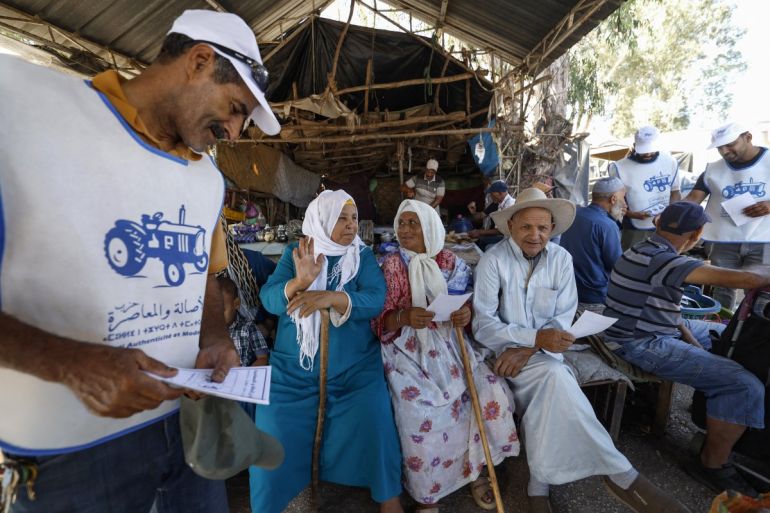
Morocco’s parliamentary election this week has taken place against an unusual contradiction. The country has attracted substantial foreign investment, expanded infrastructure and positioned itself as an increasingly important manufacturing and commercial hub between Europe and Africa. It is preparing to co-host the 2030 FIFA World Cup, its automotive and aerospace industries have expanded, and the government has invested heavily in transport and tourism. Yet large numbers of Moroccans, particularly younger citizens, remain deeply dissatisfied with employment, housing and public services. Youth unemployment reached roughly 37% in 2025, while recent youth-led protests and attempts by young Moroccans to migrate towards Europe have exposed a much less optimistic social reality beneath the investment narrative. Only about 15.8 million of roughly 26.7 million eligible citizens registered to vote, itself an important indicator of political disengagement. The most interesting question raised by this election is therefore not simply which party wins the most seats. It is what economic growth means politically when citizens can see national development occurring around them without feeling that they possess an equivalent stake in its benefits.
GDP growth is often treated as the most objective measure of national progress because it aggregates economic production without requiring us to decide philosophically what a good life should contain. That is useful, but incomplete. A new railway, hotel or automobile plant increases national output, yet an unemployed graduate does not experience aggregate GDP; they experience whether their education converts into work, whether wages allow them to rent a home and whether public institutions appear responsive to their problems. This is the distinction between economic development as accumulation and development as capability. The first asks how much a country produces. The second asks what citizens are actually able to do with the society’s expanding resources.
Morocco’s youth unemployment problem demonstrates why this gap can become politically destabilising. Education raises expectations as well as skills. A young person who completes university reasonably expects greater economic mobility than their parents had. When the economy cannot generate enough jobs matching those expectations, education can paradoxically increase frustration because it widens the distance between what individuals believe their qualifications should provide and what the labour market actually offers. The relevant political variable is therefore not simply absolute income but the gap between expectation and attainable opportunity.
This helps explain why large infrastructure projects can coexist with public dissatisfaction. Governments naturally prefer investments that are visible and measurable: airports, stadiums, railways and industrial zones demonstrate state capacity physically. Many are economically valuable. But human development depends equally on less spectacular systems such as schools, hospitals, municipal administration and functioning labour markets. Morocco’s preparations for the 2030 World Cup have therefore become politically symbolic. Supporters see infrastructure and tourism investment capable of accelerating development; critics ask why a country able to finance major sporting infrastructure still struggles to provide sufficient healthcare, housing and employment. The debate is ultimately about opportunity cost: every dirham spent publicly represents another possible use that was rejected.
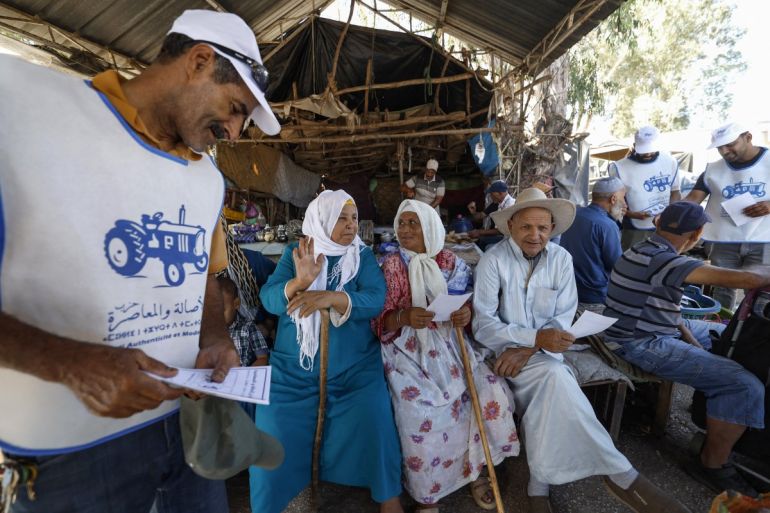
The election also highlights the unusual structure of Moroccan political authority. Morocco holds competitive multiparty parliamentary elections, but King Mohammed VI and the monarchy retain extensive constitutional and practical authority, particularly over strategic areas of government. Political parties therefore compete for meaningful power without controlling the entire state. This creates an interesting question about democratic accountability. Citizens can punish a governing party for poor performance, but if the most consequential decisions are distributed between elected institutions and a powerful monarchy, responsibility becomes harder to assign. Accountability requires not merely the ability to remove somebody from office, but enough clarity about who possessed the authority to produce the outcome being judged.
This is one reason low electoral participation matters beyond voter apathy. Citizens abstain for many reasons: inconvenience, satisfaction, political alienation or simply lack of interest. But persistent abstention can also indicate a belief that changing representatives will not substantially change policy. When that belief becomes widespread, elections can remain procedurally competitive while losing some of their function as mechanisms for translating social dissatisfaction into institutional change. Protest then becomes relatively more attractive because the street appears capable of communicating urgency that the ballot box does not.
This creates a dangerous feedback loop. Citizens believe institutions are unresponsive, so they disengage electorally. Lower participation allows organised political networks to become relatively more influential. Institutions then become less representative of disengaged citizens, reinforcing the belief that ordinary participation achieves little. The solution is not compulsory enthusiasm for elections. It is making political participation consequential enough that citizens have rational reasons to invest time in it.
The monarchy itself derives legitimacy from sources extending beyond electoral democracy: history, religion, national unity and the king’s constitutional position as Commander of the Faithful. Political legitimacy can indeed have multiple foundations. States do not become stable only because citizens vote. Tradition, performance and national identity can all generate consent. But different forms of legitimacy cannot substitute for one another indefinitely. A monarchy with strong historical legitimacy still faces citizens judging whether contemporary institutions provide jobs and public services. Inherited legitimacy can stabilise a political order; it cannot permanently compensate for weak performance.
Morocco’s economic model has genuine strengths. Its proximity to Europe, trade agreements, ports and relatively strong infrastructure have helped attract manufacturers seeking competitive production locations close to European markets. Renewable energy, particularly solar and wind, offers another potential advantage, while Morocco’s enormous phosphate reserves give it strategic importance in global fertiliser supply. These assets create opportunities many developing economies would envy.
The challenge is converting them into sufficiently broad productivity gains. A foreign-owned factory increases exports, but its development effect becomes much larger when domestic suppliers acquire technology, workers develop transferable skills and local firms eventually move into higher-value production. This is the difference between hosting production and accumulating productive capability. Successful industrial policy should measure not merely how many factories arrive but how much domestic knowledge remains if a multinational eventually leaves.
The same applies to tourism and the World Cup. Tourism can create enormous employment and foreign-exchange earnings, but many tourism jobs are relatively low-productivity and seasonal. Mega-events can accelerate infrastructure that would have been useful anyway, or they can produce expensive facilities whose economic return declines after the event. The correct test is additionality: what infrastructure and productive capacity will Morocco possess in 2031 that it would not have possessed without hosting the tournament, and will those assets generate enough social return to justify their cost?
Inequality makes these questions politically sharper because visible development can increase dissatisfaction when benefits appear concentrated. A new high-speed railway or luxury development demonstrates what the country is capable of building. Citizens living with weak schools or hospitals can then interpret poor public services less as unavoidable scarcity and more as evidence of political prioritisation. Development changes not only material conditions but citizens’ beliefs about what government could have done differently.
Morocco also sits in an unusually valuable geopolitical position. It maintains deep economic links with Europe and the United States while expanding relationships across Africa, the Gulf and increasingly Asia. Its dispute with Algeria over Western Sahara remains central to regional politics, and Rabat has successfully persuaded several governments to move closer to its position on Moroccan sovereignty over the territory. Yet the same principle Morocco invokes regarding territorial integrity becomes contested by Sahrawis claiming self-determination. This is another reminder that international political principles frequently conflict rather than supplying automatic answers.
Territorial integrity protects states from fragmentation. Self-determination protects populations from being governed permanently without consent. Both principles have legitimate purposes, and Western Sahara lies precisely where they collide. Morocco’s growing diplomatic influence can strengthen its position internationally, but political power does not by itself resolve the normative question. Recognition can establish who other governments are willing to treat as sovereign; legitimacy also asks what political arrangement the people living under that sovereignty regard as acceptable.
The election should therefore be understood as part of a larger question about Morocco’s development model. The country has achieved enough economic progress that citizens increasingly expect more than macroeconomic stability and impressive infrastructure. They want mobility, functioning public services and meaningful influence over institutions. This is a problem successful developing states often encounter: development raises expectations faster than governments realise.
That is not evidence that growth failed. It is evidence that growth changes the standard by which success is judged.
Morocco’s next stage therefore cannot simply involve producing more infrastructure or attracting more investment. It needs to convert national economic capacity into broader individual capability while making political institutions responsive enough that dissatisfaction can be expressed through ordinary participation rather than only through protest or migration.
A government can point towards rising GDP, new factories and international sporting events as evidence that the country is progressing, and those achievements can be real. But political legitimacy is ultimately experienced from the bottom upwards: citizens ask not only whether their country is becoming more impressive, but whether becoming part of that country’s progress feels realistically possible for them.

