This week, international politics unfolds through a series of events that collectively underscore how power consolidation, strategic signaling, and domestic pressures shape state behavior across regions. I observe a recurring pattern: governments navigating moments of vulnerability by reinforcing authority, recalibrating external relations, and managing perception, often simultaneously. From East Asia to Africa and the Middle East, the emphasis is less on dramatic rupture and more on controlled adjustment under constraint.
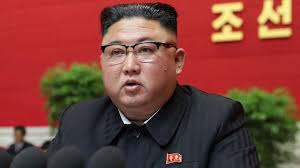
In East Asia, North Korea’s 8th Party Congress offers a revealing window into regime priorities at a moment of economic strain and international uncertainty. Kim Jong-un’s extended address, culminating in his unanimous election as General Secretary of the Workers’ Party, reflects a deliberate consolidation of authority. I note that the elevation to this title, previously held only by Kim Il-sung and Kim Jong-il, is not merely symbolic; it institutionalizes Kim’s leadership at a time when internal legitimacy matters as much as external deterrence. His candid admission that previous economic plans have failed stands out. Such acknowledgments are rare in North Korean political discourse, and I interpret this as a calculated effort to manage domestic expectations ahead of potentially harsher conditions, including food insecurity following the 2020 floods.
At the same time, Kim’s emphasis on strengthening nuclear deterrence and military capability signals continuity rather than escalation. He frames engagement with the United States as conditional, insisting that dialogue cannot come at the cost of denuclearization. I observe that this posture appears designed to position North Korea ahead of the incoming Biden administration, projecting resolve while leaving space for negotiation on Pyongyang’s terms. Inter-Korean relations, by contrast, are treated with notable detachment. By declaring that ties have reverted to their pre-2018 state, Kim effectively lowers expectations, signaling that Seoul’s room for maneuver remains constrained by its alliance with Washington. The Congress, taken as a whole, reflects a regime prioritizing stability through control, deterrence, and narrative management amid uncertainty.
In the Middle East, the United States’ decision to designate the Houthi movement in Yemen as a foreign terrorist organization illustrates how late-stage policy choices can carry long-term consequences. Announced days before the presidential transition, the move is framed as part of a broader effort to counter Iranian influence and support regional partners. Yet I observe that its immediate implications are humanitarian rather than strategic. The Houthis control much of Yemen’s territory and function as a de facto governing authority, meaning that aid delivery is deeply intertwined with engagement on the ground. Warnings from the United Nations and humanitarian organizations suggest that the designation risks disrupting food supplies and exacerbating famine in a country already on the brink.
From a strategic perspective, the decision aligns with the expectations of the Arab coalition and fits within the outgoing administration’s “maximum pressure” approach toward Iran. However, it also constrains the policy space of the incoming administration, which must now balance alliance commitments with humanitarian concerns. I note how this episode demonstrates the enduring tension between counterterrorism frameworks and human security, especially in protracted conflicts where non-state actors control territory. Yemen, once again, becomes a site where geopolitical signaling intersects uncomfortably with civilian suffering.
In Africa, Uganda’s presidential election highlights the dynamics of long-term incumbency under demographic pressure. Yoweri Museveni’s victory secures him a sixth term after more than three decades in power, placing him among a cohort of leaders across the continent who have maintained authority through constitutional change, institutional control, and security dominance. I observe that the election unfolds under heavy restrictions, including internet shutdowns and the targeting of opposition supporters, reflecting an acute sensitivity to mobilization in both physical and digital spaces.
What distinguishes this election, however, is the scale of youth engagement behind opposition candidate Bobi Wine. With a population that is overwhelmingly young, Uganda’s political future appears increasingly shaped by generational divides. Museveni’s aggressive containment of Wine’s campaign suggests that the regime recognizes this shift, even if it successfully suppresses it in the short term. I note that while the opposition faces limited immediate avenues to challenge the outcome, Wine’s continued relevance points to a longer-term recalibration of Ugandan politics, where legitimacy may become harder to sustain through control alone.
Beyond these focal developments, regional events reinforce the theme of governance under pressure. In East and Southeast Asia, the arrival of a World Health Organization team in Wuhan reflects the persistent political sensitivity surrounding the origins of COVID-19, even as scientific inquiry proceeds cautiously. Hong Kong’s arrests related to the assistance of fleeing activists illustrate how the National Security Law continues to redefine the boundaries of legal and political action, even in the absence of mass protests. In South Korea, efforts to secure the release of an oil tanker seized by Iran reveal how sanctions regimes entangle otherwise unrelated bilateral issues, forcing smaller and middle powers into delicate diplomatic balancing acts.
In South Asia, domestic governance and regional diplomacy intersect repeatedly. India’s Supreme Court intervention in the farm laws dispute demonstrates the judiciary’s role as an institutional mediator amid prolonged social mobilization, while parallel diplomatic engagements with Nepal, Sri Lanka, and Afghanistan underline the region’s interconnected political and security concerns. I observe that across these cases, states are increasingly required to manage internal dissent without undermining external credibility, a balance that remains difficult to sustain.
Elsewhere, Europe and the Americas reflect similar patterns. Political instability in Italy, triggered by disputes over the allocation of recovery funds, shows how economic crisis management can strain coalition governance. In the United Kingdom, post-Brexit trade disruptions underscore the tangible effects of structural political decisions on everyday economic activity. In the United States, the announcement of a large-scale economic relief package by the incoming administration signals an attempt to restore confidence domestically and internationally, even as institutional strain remains visible through impeachment proceedings and platform-level interventions by technology companies.
Taken together, this week reinforces my understanding of international relations as a discipline shaped less by isolated events than by cumulative signals. Leaders consolidate authority not only through force or law, but through narrative control, institutional positioning, and strategic timing. I observe how economic vulnerability often coincides with assertive external posturing, and how transitions (whether electoral, generational, or geopolitical) create moments of heightened sensitivity across systems.
What stands out most is the centrality of perception. Whether it is North Korea acknowledging failure while asserting strength, the United States signaling resolve in Yemen while confronting humanitarian fallout, or Uganda projecting electoral legitimacy amid suppression, each actor is acutely aware of multiple audiences. This week illustrates that global politics is conducted not only through decisions, but through the careful management of how those decisions are seen, interpreted, and remembered.

