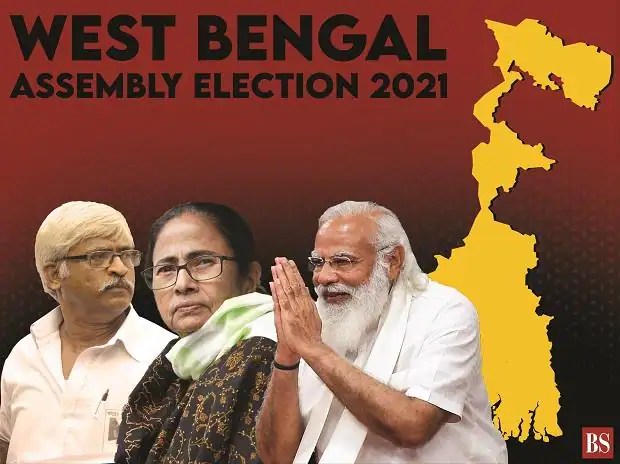
For weeks, the West Bengal election has seemed almost impossible to ignore.
Prime Minister Narendra Modi and the BJP campaigned intensely across the state, hoping to replace Mamata Banerjee and the Trinamool Congress. The election became one of the biggest political battles in India.
Today, the result arrived.
Mamata Banerjee’s TMC has won West Bengal again, and much more decisively than many expected.
What I find interesting is not simply who won. It is how easy it is to misunderstand what an election actually measures.
Watching campaigns, it can sometimes feel as though elections are competitions between personalities. Who attracts the largest crowd? Who gives the strongest speech? Who appears most often on television?
But voters do not necessarily think in those terms.
Someone can support Narendra Modi as Prime Minister and still prefer Mamata Banerjee to govern West Bengal. Someone can dislike parts of the TMC’s record and still believe that a regional party understands their state better. Political support does not always fit neatly into one box.
I think I used to see elections more like scoreboards. One party wins, another loses, and the result tells us which one people prefer.
This election has made me realise that the answer is more complicated.
India is one country, but it contains states with different languages, histories, political traditions and priorities. A message that works nationally may not work in exactly the same way locally. Perhaps voters are not only asking, “Which party do I like?” They are asking, “Who do I trust to make decisions here?”
There is something else important about today’s result.
Winning an election proves that a political strategy succeeded. It does not automatically prove that every decision made by the winner was correct.
Last week, I wrote about the responsibility of politicians during the COVID crisis. An election result does not erase those questions. Nor does losing an election mean that everything proposed by the losing side was wrong.
Democracy would be much easier to understand if victory meant “right” and defeat meant “wrong”.
It doesn’t.
An election gives politicians authority. What they do with that authority determines whether voters were right to trust them.
Maybe that is the more important part of an election.
Not who celebrates on the day the votes are counted, but what they do the morning after.

