There is a point at which a crisis stops being only about the crisis itself and becomes a test of the government responsible for managing it.
India may have reached that point this week.
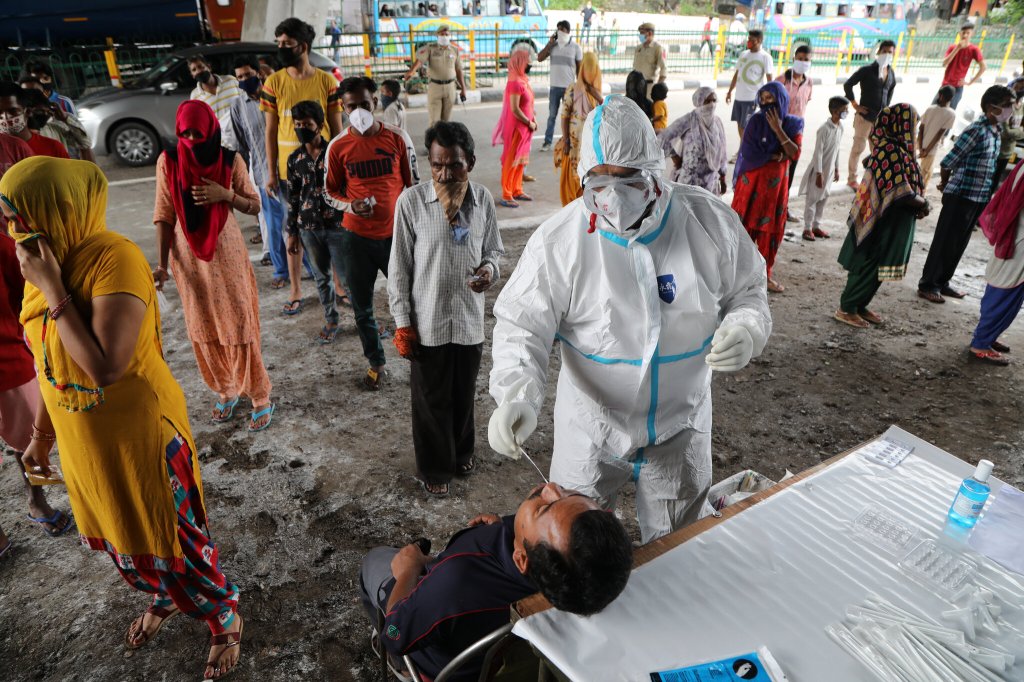
On Wednesday, India reported 382,315 new COVID-19 cases and 3,780 deaths in just twenty-four hours. The World Health Organization reported that India accounted for almost half of the COVID-19 cases recorded globally in the previous week and approximately a quarter of reported deaths.
These numbers are difficult to comprehend. But the reality behind them is worse.
Hospitals have struggled to find beds. Families have searched desperately for oxygen cylinders. Crematoriums have been overwhelmed. Even as the government maintains that oxygen supplies are sufficient nationally, getting that oxygen to the hospitals and cities that need it has become an enormous logistical problem.
Last week, I wrote about political responsibility during the pandemic, particularly after weeks of election rallies and enormous public gatherings.
This week, I think the question has become larger.
The issue is no longer simply whether politicians behaved irresponsibly before the second wave. It is whether India’s political system was adequately prepared to respond once that wave arrived.
And that is a much more uncomfortable question.
A crisis that did not arrive without warning
COVID-19 is unpredictable. Governments cannot know exactly when cases will rise, which variant will spread or precisely how many people will require hospital treatment.
That does not mean governments cannot prepare.
India experienced its first major wave last year. The country therefore entered 2021 knowing that another increase in infections was possible. Yet the health system is now struggling with shortages of beds, medicines and, most visibly, medical oxygen.
The government’s principal scientific adviser, K. VijayRaghavan, made an even more worrying announcement this week: a third wave is “inevitable”, although nobody yet knows when it will occur.
That statement changes how we should think about the present crisis.
If another wave is possible, then simply surviving this one cannot be considered a complete success. The real test will be whether governments learn quickly enough to prevent the same shortages from occurring again.
There is a difference between being surprised once and remaining unprepared twice.
Who is actually responsible?
This is where the politics becomes complicated.
It is tempting to talk about “the government” as though India has one enormous control room in Delhi from which every hospital bed, oxygen cylinder and vaccine is managed.
It doesn’t.
India is a federal country. State governments administer important parts of healthcare and are imposing many of the restrictions currently being used to control infections. West Bengal, for example, introduced new restrictions this week, while other states have adopted their own measures.
At the same time, the Union government controls resources and policies that individual states cannot manage alone. Vaccine policy, national coordination, international procurement and the movement of essential supplies across state borders all require central leadership.
That makes assigning responsibility more difficult, but it does not make responsibility disappear.
In fact, perhaps it makes coordination even more important.
When a crisis crosses every state boundary, a system in which different governments blame each other can become dangerous very quickly. A chief minister can blame Delhi. Delhi can blame state administration. Political parties can blame their opponents.
The virus does not particularly care whose constitutional responsibility something was.
People waiting outside a hospital probably don’t either.
The lockdown dilemma
Another political argument is emerging: should India enter another national lockdown?
The opposition has called for one. The Modi government has so far resisted, while several states have imposed their own restrictions.
A year ago, I might have thought the answer was simple. Cases are rising, so impose a lockdown.
After what happened during India’s first lockdown, I don’t think it is possible to treat the decision that casually.
India contains hundreds of millions of people whose livelihoods cannot simply move onto Zoom. Daily-wage labourers, small businesses and migrant workers can face enormous economic consequences when movement suddenly stops. A policy that protects someone from infection may simultaneously remove somebody else’s income.
But the opposite argument is equally difficult to ignore. If infections continue spreading at this rate, the economic damage will not disappear merely because the government avoids calling something a lockdown. Sick workers cannot work. Overwhelmed hospitals affect everyone. Fear itself changes economic behaviour.
So the real choice is probably not between “protect the economy” and “protect lives”.
It is between different ways of damaging both, while trying to minimise that damage.
That is not a particularly satisfying answer. Politics rarely provides one.
Vaccines were supposed to change the equation
Perhaps the most frustrating part of the present situation is that India is one of the world’s largest vaccine producers.
Yet vaccinations have slowed as several states report shortages. Some vaccination centres in Maharashtra have had to close temporarily because doses were unavailable.
This seems almost contradictory: how can a country capable of manufacturing vaccines on an enormous scale struggle to vaccinate its own population?
But manufacturing capacity and successful vaccination are not the same thing. Vaccines have to be produced, purchased, distributed and administered. States need predictable supplies. People need appointments. Rural areas need access. And all of this has to happen quickly enough to matter while the virus continues spreading.
This is where government becomes less visible but perhaps more important.
Politics is normally represented by elections, speeches and Parliament. Yet some of the most consequential political decisions are incredibly boring: procurement contracts, transportation systems, hospital capacity, supply forecasts and contingency planning.
Nobody campaigns by promising excellent oxygen logistics.
Until people cannot breathe.
Accountability cannot become another political competition
There will inevitably be arguments over who caused this crisis.
Some criticism of the central government is justified. Allowing enormous election rallies while infections were accelerating now appears extraordinarily difficult to defend. Large religious gatherings also continued while the danger was increasing.
But reducing everything that is happening to “Modi failed” would be too easy.
State governments have responsibilities. Local administrations have responsibilities. Citizens have responsibilities. Decades of insufficient healthcare capacity cannot be explained entirely by decisions made during the last several months.
Recognising those facts should not, however, become an excuse for avoiding scrutiny of the people currently in power.
That distinction matters.
Criticism does not require believing that a government caused every element of a crisis. Governments should instead be judged on the things they could reasonably have anticipated, the decisions they actually controlled and how quickly they corrected mistakes once those mistakes became apparent.
That seems a fairer standard than either blaming politicians for everything or excusing them because the pandemic is unprecedented.
What happens after the numbers fall?
Eventually, this wave will decline.
When it does, there will probably be a temptation to celebrate falling case numbers and move on.
India cannot afford to do that again.
The most important political decisions may actually come after the immediate emergency: increasing oxygen capacity, rebuilding vaccine supplies, preparing hospitals, improving surveillance and deciding what restrictions should automatically be considered if cases begin rising again.
The warning about a possible third wave means the government is being given something extremely valuable that thousands of families did not receive during this wave:
a warning.
What it does with that warning will tell us considerably more about India’s leadership than another election rally ever could.
Last week, I argued that leadership means accepting responsibility for the example you set.
I think I would add something to that now.
Leadership is also the ability to learn before the same mistake becomes another tragedy.

