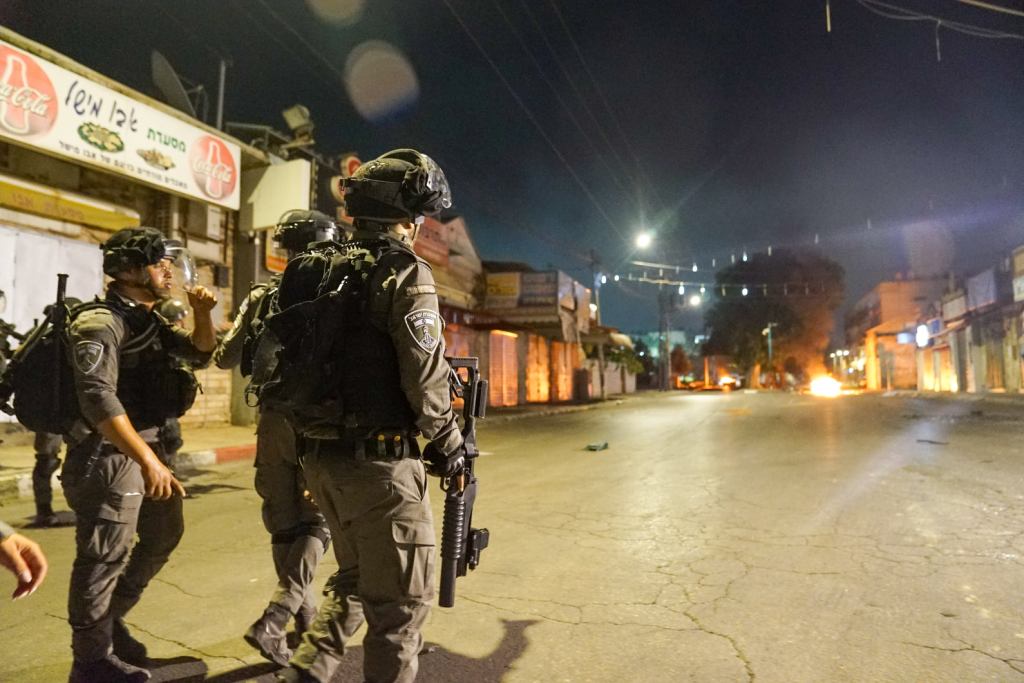
For most of this week, images from Israel and Gaza have looked less like news reports and more like scenes from a war.
Rockets have been fired from Gaza towards Israeli cities. Israel has responded with extensive air strikes on Gaza. Buildings have collapsed, families have been killed and Israeli civilians have repeatedly rushed towards bomb shelters.
Yet describing what happened this week simply as “Israel versus Palestine” misses much of what actually caused it.
The violence did not suddenly begin on Monday.
For weeks, tensions had been growing in Jerusalem, particularly around the possible eviction of Palestinian families from homes in Sheikh Jarrah in East Jerusalem. There were then confrontations between Palestinians and Israeli police around the Al-Aqsa Mosque compound during Ramadan.
Jerusalem matters politically, historically and religiously to both Israelis and Palestinians, which means that apparently local disputes rarely remain local for long.
On Monday, Hamas issued an ultimatum demanding that Israeli security forces withdraw from Al-Aqsa and Sheikh Jarrah. When the deadline passed, Hamas and other Palestinian militants began firing rockets towards Israel, including Jerusalem.
Israel responded with air strikes on Gaza.
By the end of this week, the confrontation had become the most serious fighting between Israel and Hamas in years.
And almost immediately, the rest of the world began arguing about which side was right.
I am beginning to think that may be one of the least useful questions we can ask.
Two things can be wrong at the same time
It should not be controversial to say that deliberately or indiscriminately firing rockets towards civilian areas is wrong.
Hamas has fired thousands of rockets towards Israel. Israeli civilians should not have to calculate how many seconds they have to reach a bomb shelter because of decisions made by a militant organisation in Gaza.
Israel has a right to protect its population from those attacks.
But saying that does not automatically justify everything Israel does in response.
Gaza is one of the most densely populated places in the world. Israeli strikes may be aimed at Hamas infrastructure and commanders, but bombs dropped into densely populated neighbourhoods inevitably create enormous risks for civilians.
The Palestinian death toll is already much higher than the Israeli one.
That difference does not mean Israeli lives are somehow worth less because Israel possesses Iron Dome shelters and a much stronger military. Nor does the existence of Hamas mean Palestinian civilians become responsible for rockets they did not fire.
This sounds obvious when written down.
Judging by political arguments this week, apparently it isn’t.
There seems to be a strange expectation that acknowledging one population’s suffering somehow diminishes the suffering of the other.
It shouldn’t.
Explanation is not justification
There is another distinction I think matters.
Understanding why something happens is not the same as defending it.
Palestinian anger did not appear from nowhere. Palestinians have lived for decades without the independent state promised by repeated attempts at peace. Israel captured East Jerusalem, the West Bank and Gaza during the 1967 war. Israel later withdrew its settlers and soldiers from Gaza, but the broader Israeli-Palestinian conflict remained unresolved.
Questions involving Israeli settlements, Palestinian statehood, refugees, borders and Jerusalem have survived peace negotiations for decades.
That history helps explain why confrontations in Jerusalem can produce such enormous anger.
It does not make firing rockets at civilians acceptable.
The same applies in reverse.
Israel has genuine security concerns. Hamas does not recognise Israel and has repeatedly attacked it. Israeli governments therefore have an obligation to protect their citizens.
That explains why Israel responds militarily.
It does not mean every possible military response is automatically justified.
Politics becomes dangerous when explanation and justification are treated as the same thing. If explaining Palestinian grievances is labelled support for Hamas, it becomes impossible to understand why violence keeps returning. If explaining Israeli security fears is treated as support for every Israeli policy, the same thing happens.
You cannot solve a conflict you refuse to understand.
The enormous imbalance of power
There is also an uncomfortable reality that cannot be ignored: Israel and Hamas are not equal military powers.
Israel is a state with one of the region’s strongest militaries, advanced aircraft and the Iron Dome missile-defence system. Hamas controls Gaza and possesses rockets, but it does not have anything approaching Israel’s military capabilities.
That imbalance matters because greater power creates greater choices.
Israel argues that Hamas operates from civilian areas, making it extraordinarily difficult to attack the organisation without endangering civilians. That is a serious problem.
But possessing superior military power also means Israel has a greater ability to determine the scale and character of its response.
I don’t think responsibility can therefore be measured simply by counting who fired first or who fired more.
We should ask what each actor intended, what alternatives it possessed, what risks it knowingly imposed on civilians and whether the force it used was proportionate to the objective it was trying to achieve.
Those questions are harder than choosing a flag and posting it online.
They are also probably more useful.
This is political inside Israel too
The international dimension is receiving most of the attention, but this crisis is also unfolding during an extraordinary period in Israeli politics.
Benjamin Netanyahu has been Prime Minister for twelve consecutive years, but Israel has held four elections in just two years because its political parties have repeatedly failed to produce stable governments.
After the March election, Netanyahu again failed to form a governing coalition. Opposition leader Yair Lapid was given the opportunity to try instead.
Now war has intervened.
That does not mean Netanyahu created this conflict to remain Prime Minister. Claiming that without evidence would turn political analysis into conspiracy.
But political leaders never make decisions in a vacuum.
A security crisis changes what voters care about. It changes negotiations between political parties. It changes which politicians appear necessary and which disagreements suddenly seem less important.
That means we should be capable of asking how a crisis affects political incentives without automatically claiming that those incentives caused the crisis.
This is something I am noticing increasingly in politics: motives rarely come one at a time.
A government can genuinely believe that military action is necessary for national security while also understanding that the same action has political consequences at home.
Both can be true.
And Hamas is political too
The same scrutiny should apply to Hamas.
Hamas is not simply a collection of people firing rockets. It is also a political organisation that has governed Gaza since taking control there in 2007 and competes for influence within Palestinian politics.
The Palestinian Authority, dominated by Hamas’s rival Fatah, governs parts of the West Bank. Palestinian elections scheduled for this year were recently postponed by President Mahmoud Abbas.
That matters.
By presenting itself as the organisation willing to respond militarily over Jerusalem, Hamas can strengthen its claim to represent Palestinian resistance in a way its political rivals cannot.
Again, identifying that incentive does not prove that the entire confrontation was manufactured for political gain.
It simply reminds us that armed organisations have political objectives too.
Where does this end?
That is the question I cannot answer.
A ceasefire may eventually stop this particular exchange of rockets and air strikes. International governments are already calling for de-escalation.
But a ceasefire would stop the fighting without resolving most of the reasons the fighting began.
Sheikh Jarrah would still exist. The status of Jerusalem would remain disputed. Gaza would remain isolated. Israeli security concerns would remain. Palestinian statehood would remain unresolved. Hamas would remain in Gaza. Israel would remain overwhelmingly militarily superior.
The immediate objective must obviously be stopping civilians from dying.
But if the international response ends there, we will probably be discussing another “sudden escalation” several years from now.
There is a pattern in politics that I am starting to notice.
We pay enormous attention to crises once buildings are burning and remarkably little attention to the political failures that make those crises possible.
Then the violence stops.
The cameras leave.
The underlying problem remains.
Perhaps the hardest part of peace is not convincing two sides to stop fighting when the cost becomes unbearable.
It is convincing them to compromise once the world stops watching.

